|
| |
|
Due to the versatility of lac resin, it finds innumerable uses both in industries and domestic fields. On the stand point of industrial uses of shellac one or more of the following properties are of great importance:
-
Shellac dissolves in a wide variety of alkaline solutions or rapidly drying alcoholic solvents but is resistant to a number of other solvents particularly hydrocarbons.
-
Its film shows excellent adhesion to a wide variety of surfaces, possessing high gloss, hardness and strength.
-
Shellac is a powerful bonding material with low thermal conductivity and a small coefficient of expansion. Its thermal plasticity and capacity of absorbing large amounts of fillers are noteworthy.
-
Its electrical properties include high dielectric strength, low dielectric constant and characteristic freedom from tacking.
-
It is resistant to the action of ultraviolet rays.
-
Shellac is non-toxic
|
| |
|
| |
|
Some of the main uses of shellac in different fields are:
-
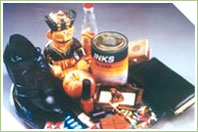
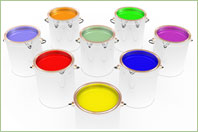
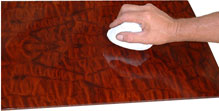
Surface coating - As under coat, primer, sealer, French Polish, Leather dressing, Fruit Coating etc.
-
Printing - Flexographic ink, Waterproof ink, Photo engraving.
-
Textiles - Stiffening of hats.
-
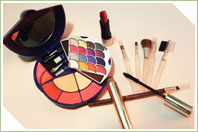
Cosmetic & Pharmaceuticals - Hair lacquer, hair sprays (Pump sprays or aerosol aprays with propan-butan or DME), hair setting lotions, hair shampoos mascara, eyeliners, nail polishes, lipsticks microencapsulation by coacervation of fragrances and perfume oils, coating for Enteric pills, Dental base place.
-
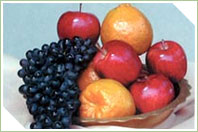
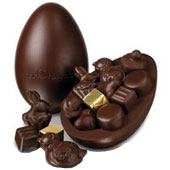
Food - Coating of confections, chewing gum, candles, cakes, eggs, coating of Citrus fruits and apples, printing inks for eggs and cheese.
-
Engineering - Grinding wheels, Rivet & Plate sealer.
-
Electrical - Micanite, Insulating Varnish.
-
Photography - Dry mounting tissue paper, protective varnish.
-
Paper - Paper varnish, playing cards.
-
Rubber - Stiffening agent, surface finish.
-
Adhesive - Gasket cement, sealing wax, pyrotechnic Optical Cement.
|
|
|
|
|
|